Living with many missing or failing teeth can affect much more than a smile. It may make eating uncomfortable, change speech, and leave a person feeling self-conscious in social situations. Traditional dentures can help, but some patients want a replacement that feels more stable.
For people exploring All-on-4 in Redwood City, CA, this full-arch dental implant approach may offer an alternative to removable dentures. It uses a small number of carefully positioned implants to support an entire row of replacement teeth.
All-on-4 is not appropriate for everyone, and the experience varies based on oral health, bone structure, medical history, and the type of restoration selected. Understanding the process can help patients ask informed questions and approach a consultation with realistic expectations.
What Is the All-on-4 Treatment Concept?
All-on-4 is a full-arch tooth replacement concept. Instead of placing a separate implant for every missing tooth, the clinician typically places four implants at strategic points in the upper or lower jaw. Those implants support a connected bridge containing a complete row of replacement teeth.
The back implants may be angled to make effective use of available bone and create a stable foundation. However, “four” should not be treated as a universal rule. Some patients need a different number or arrangement of implants because of their anatomy, bite forces, bone quality, or restorative needs.
An evidence review of the All-on-4 treatment concept reported high patient satisfaction in the studies it examined, while also noting possible mechanical and prosthetic complications. As with any dental procedure, favorable published outcomes do not guarantee an individual result.
Is All-on-4 the same as dentures?
Not exactly. A conventional denture rests on the gums and is removed for cleaning. An All-on-4-style restoration is connected to dental implants, giving it more support than a traditional removable denture.
Many All-on-4 restorations are fixed, meaning patients do not remove them at home. A dental professional can remove the bridge when maintenance or repairs are necessary. Other implant-supported designs may snap on and off. The best design depends on clinical needs, hygiene ability, lifestyle, and budget.
ARCH Dental + Aesthetics offers additional information in its guide to implant-supported dentures.
Who May Be a Candidate for All-on-4?
Full-arch implant treatment is generally considered for adults who have lost most or all teeth in one arch, or whose remaining teeth have a poor long-term outlook. It may also interest patients who struggle with loose conventional dentures.
A clinician will look beyond the number of missing teeth. A complete evaluation may consider:
- The condition of the remaining teeth and gums
- The amount and quality of available jawbone
- The patient’s bite and the space available for a restoration
- Current medications and overall health history
- Tobacco or nicotine use
- Past dental treatment and oral hygiene habits
- The patient’s goals, expectations, and ability to attend follow-up visits
Having bone loss does not automatically rule someone out. Strategic implant positioning may reduce the need for extensive grafting in selected cases, but no technique can eliminate the need for grafting in every patient. Three-dimensional imaging and a clinical examination help determine what is realistic.
When might another option be better?
A dentist may recommend a conventional denture, removable implant-supported denture, or a different fixed implant design. Treatment may also need to be delayed while active gum disease, infection, uncontrolled grinding, or another health concern is addressed.
The goal is not simply to qualify someone for a particular procedure. It is to choose a solution that can be cleaned, maintained, and used comfortably over time.
What Happens During the All-on-4 Process?
Although All-on-4 is sometimes promoted as a rapid solution, it is better understood as a multi-stage treatment. Surgery may occur in one appointment, but biological healing, bite adjustments, and fabrication of the final teeth continue afterward.
1. Consultation and planning
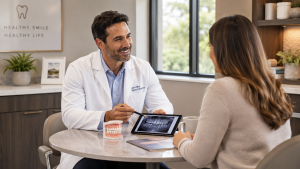
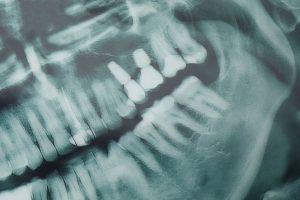
The first stage includes a conversation about concerns, medical history, dental history, and treatment goals. The dental team examines the mouth and may use digital scans, photographs, X-rays, or three-dimensional imaging to evaluate anatomy and plan implant positions.
This is also the time to discuss sedation choices, materials, costs, maintenance, alternatives, and what will happen if the original plan must change during treatment.
2. Preparing the mouth
Any teeth that cannot be preserved may need to be removed. Depending on the case, the clinician may also reshape bone, treat infection, or perform grafting. Not every patient needs the same preparatory procedures.
3. Placing the implants
Implants are placed into planned areas of the jaw. The dental team then evaluates their stability and decides whether a temporary fixed bridge can be attached right away.
“Same-day teeth” usually refers to a temporary restoration rather than the final bridge. Immediate attachment is not guaranteed. If the implants do not have the required initial stability or the clinical situation changes, a removable temporary option or a period without loading may be safer.
4. Healing and monitoring
Several different types of recovery happen after implant surgery, and they should not be confused:
- Early symptom recovery is the initial period when tenderness, swelling, bruising, and minor bleeding settle.
- Soft-tissue healing involves the gums closing and maturing around the surgical areas.
- Osseointegration is the longer biological process in which bone forms a stable connection with the implant surfaces.
- Treatment completion occurs only after the clinician confirms appropriate healing and the final restoration has been made, fitted, and adjusted.
These phases occur on different schedules. The dental team will monitor healing rather than relying on a single standard timeline.
5. Receiving the final restoration
Once the implants and tissues are ready, the temporary teeth may be replaced with a custom final bridge. The dentist checks appearance, speech, bite, comfort, and cleaning access. Follow-up adjustments may still be needed as the patient becomes accustomed to the new restoration.
Comfort, Recovery, and Potential Risks
Local anesthetic is used to numb the treatment area, and some patients may be offered sedation based on their needs and health history. The clinician should explain what sensations to expect and provide individualized instructions for medication, eating, oral hygiene, and activity.
Temporary swelling, soreness, bruising, and changes in chewing can occur after surgery. Patients should contact the treating office if symptoms are severe, worsen unexpectedly, or are accompanied by concerns such as persistent bleeding, fever, drainage, unusual numbness, or a loose restoration.
Potential complications include infection, delayed healing, failure of an implant to integrate, gum or bone problems, damage to nearby anatomy, bite discomfort, and loosening or fracture of prosthetic components. The published systematic review linked above also identified mechanical complications involving acrylic or prosthetic parts. Careful planning and follow-up reduce risk, but they cannot remove it entirely.
Eating and Cleaning With Full-Arch Implants
Patients usually follow a modified diet while implants heal. Even when a temporary bridge feels secure, it should not be treated like fully healed natural teeth. The dental team will explain which food textures are appropriate at each stage.
Fixed replacement teeth also require daily cleaning. Plaque can collect where the bridge meets the gums and around the implants. Depending on the design, a patient may use a soft toothbrush, floss threader, interdental brush, or water flosser. The dental team can demonstrate the safest technique for that specific restoration.
Professional maintenance remains essential. Dental visits allow the team to examine the gums and implants, assess the bite, clean areas that are difficult to reach, and check the bridge for wear or loosening. Implants cannot develop cavities, but the surrounding tissues can still become inflamed or infected.
How Much Does All-on-4 Cost in Redwood City?
There is no single fee that applies to every All-on-4 case. The total cost in Redwood City may vary according to the number of arches treated, extractions, imaging, sedation, grafting, implant components, temporary teeth, final bridge material, laboratory work, and follow-up care.
When reviewing an estimate, patients should ask whether it includes:
- Diagnostic imaging and treatment planning
- Tooth removal or bone-related procedures
- Implant placement and sedation
- The temporary restoration
- The final restoration and its material
- Follow-up visits and adjustments
- Future professional maintenance
- Repair or replacement policies
Dental insurance may cover only certain parts of treatment. A written, itemized estimate makes it easier to compare plans fairly. The lowest quote is not always the least expensive over time if it excludes necessary stages or uses a restoration that does not match the patient’s needs.
Questions to Ask at an All-on-4 Consultation
A productive consultation should leave the patient with a clear understanding of both the benefits and responsibilities. Helpful questions include:
- Why is this design recommended over other tooth-replacement options?
- How many implants are planned, and why?
- Will a temporary fixed bridge be possible?
- Could bone grafting or another preparatory procedure be needed?
- Who will perform the surgical and restorative stages?
- What material will be used for the temporary and final teeth?
- How should the bridge be cleaned at home?
- What complications should prompt an urgent call?
- What is included in the written fee?
Frequently Asked Questions
Can All-on-4 replace both upper and lower teeth?
It can be used to replace an upper arch, a lower arch, or both arches when clinically appropriate. Each jaw requires separate evaluation because bone anatomy, available space, and bite forces differ.
Are All-on-4 teeth removable?
Many All-on-4 bridges are fixed and remain in the mouth during everyday use. A dental professional can remove them for certain maintenance or repairs. Patients who prefer a restoration they can remove at home may want to discuss an implant-supported overdenture.
Will a patient receive teeth on the day of surgery?
A temporary bridge can sometimes be attached on the day implants are placed, but it depends on implant stability and other clinical findings. Same-day placement should never be promised before the surgical conditions are confirmed.
Do All-on-4 implants last forever?
No dental treatment can be guaranteed for life. Longevity depends on healing, oral hygiene, general health, bite forces, professional maintenance, and whether complications develop. The bridge and its components may also need adjustment, repair, or replacement over time.
Can someone get All-on-4 if they have gum disease?
Active gum or implant-related infection generally requires evaluation and treatment before proceeding. A clinician must assess disease control, bone support, hygiene, and long-term maintenance needs.
How can a patient begin exploring All-on-4 in Redwood City, CA?
The first step is a comprehensive consultation. Patients can contact ARCH Dental + Aesthetics in Redwood City, CA to ask about full-arch implant options and whether an individualized evaluation is appropriate.
Taking the Next Step Toward a Stable Smile
All-on-4 can provide a stable, natural-looking full-arch tooth replacement for appropriately selected patients. It may improve everyday confidence and function, but it also involves surgery, a staged healing process, careful home cleaning, and ongoing professional care.
Anyone considering treatment should compare options rather than focusing on a single technique. A personalized examination can clarify whether All-on-4, an implant-supported denture, or another approach is likely to fit the patient’s health, lifestyle, and goals.
For questions about All-on-4 in Redwood City, CA, patients are encouraged to schedule a consultation with ARCH Dental + Aesthetics and bring a list of concerns, priorities, and treatment questions.