
A brighter smile can help a person feel more confident at work, in photos, or during everyday conversations. However, with whitening toothpastes, strips, gels, trays, and in-office treatments all competing for attention, choosing the right approach can feel confusing.
For patients considering teeth whitening in Redwood City, CA, understanding how whitening works is an important first step. The best option depends on the type of discoloration, the condition of the teeth and gums, sensitivity concerns, and how quickly the patient hopes to see a change.
This guide explains the most common whitening choices, what patients can reasonably expect, and why a dental evaluation can make the process safer and more predictable.
This article provides general education and is not a substitute for personalized dental advice. A dentist should evaluate tooth discoloration, sensitivity, cavities, gum concerns, and existing restorations before recommending treatment.
What Patients Should Know About Teeth Whitening
Why do teeth become stained?
Tooth color naturally varies from person to person. Teeth may also become darker or less vibrant over time because of aging, food and drink choices, tobacco use, medications, dental trauma, or changes inside the tooth.
Many common stains are described as extrinsic stains, meaning they develop on the outer surface of the teeth. Coffee, tea, red wine, dark sauces, berries, and tobacco are familiar examples. Professional cleaning may remove some surface buildup, while whitening products can help lighten certain pigments that brushing alone cannot address.
Intrinsic discoloration develops within the tooth. It may be associated with injury, medication exposure, developmental factors, or changes in the tooth’s inner tissues. These cases do not always respond to conventional whitening in the same way as surface staining. A dentist can help identify the likely cause and discuss suitable cosmetic or restorative options.
How does teeth whitening work?
Most bleaching products use peroxide-based ingredients that move into the tooth and break up stain molecules. This makes the color appear lighter without physically scraping away healthy tooth structure.
Whitening does not produce the same shade for every patient. Results depend on the starting color, the source of the discoloration, the whitening method, and how consistently instructions are followed. Natural teeth may also lighten differently from one another.
It is important to remember that crowns, veneers, bridges, implants, and tooth-colored fillings do not respond to bleaching like natural enamel. If restorations are visible when smiling, a dentist may need to plan whitening around them to reduce the chance of an uneven color match.
Professional in-office whitening
In-office whitening is designed for patients who prefer treatment under direct dental supervision. According to the American Dental Association’s MouthHealthy resource, chairside bleaching generally involves protecting the gums before applying a bleaching material to the teeth.
During an appointment, the dental team can monitor the teeth and soft tissues, adjust the process when needed, and address discomfort. This option may appeal to someone preparing for a special event or to a patient who does not want to manage a multi-day routine at home.
Although in-office care can create a noticeable improvement, no ethical dental provider can promise a specific shade. Some types of discoloration respond more readily than others, and additional treatment or periodic touch-ups may be appropriate depending on the individual.
Dentist-supervised take-home whitening
A dentist may also provide custom-fitted trays and whitening gel for use at home. The patient places the prescribed amount of gel in the trays and wears them according to the dental team’s instructions.
Custom trays are made to fit a patient’s mouth more closely than generic products. This can help control where the gel sits and reduce unnecessary contact with the gums. Treatment typically progresses more gradually than a chairside procedure, which some patients find convenient or more comfortable.
The strength of the gel, wear schedule, and total course should follow the dentist’s directions. Using more product or leaving it on longer does not necessarily improve the result and may increase irritation or sensitivity.
Over-the-counter whitening products
Drugstore whitening strips, gels, rinses, and toothpastes can be useful in selected situations. They are generally less customized than professional options, and results can vary based on product strength, fit, stain type, and consistent use.
Whitening toothpaste primarily helps reduce surface staining through polishing or stain-removing ingredients. It may make a smile look cleaner, but it should not be expected to correct every form of deeper discoloration.
Patients should choose reputable products, follow package directions, and avoid combining several whitening methods without dental guidance. Anyone with cavities, cracked teeth, gum recession, exposed roots, or ongoing sensitivity should speak with a dentist before starting.
Is teeth whitening safe?
Teeth whitening can be safe when an appropriate product is used correctly and the teeth and gums are suitable for treatment. Dental supervision is particularly helpful because a clinician can check for oral health concerns that may affect comfort or results.
The most frequently discussed side effects are temporary tooth sensitivity and gum irritation. The ADA explains that sensitivity can occur when peroxide passes through enamel to the dentin and irritates the tooth’s nerve. Overusing whiteners may also harm the teeth or gums, making it important to follow directions rather than assuming that longer or stronger treatment is better.
Patients should stop treatment and contact a dentist if they experience significant pain, persistent sensitivity, gum injury, or an unexpected change in a single tooth. A tooth that suddenly darkens, especially after an injury, deserves a dental evaluation rather than cosmetic treatment alone.
Managing sensitivity during whitening
Mild, short-lived sensitivity can occur during or after whitening. A dentist may recommend changing how often the product is used, shortening the application period, selecting a different concentration, or pausing treatment. A toothpaste formulated for sensitive teeth may also be appropriate.
Patients can make the experience more comfortable by avoiding very hot or cold foods when sensitivity is active. They should also use only the recommended amount of whitening gel. Excess gel can spill beyond a tray and irritate the gums without providing a better outcome.
Sensitivity that is intense, localized, or slow to settle should not be ignored. It may point to a cavity, crack, exposed root, or another concern that requires professional attention.
What happens before professional whitening?
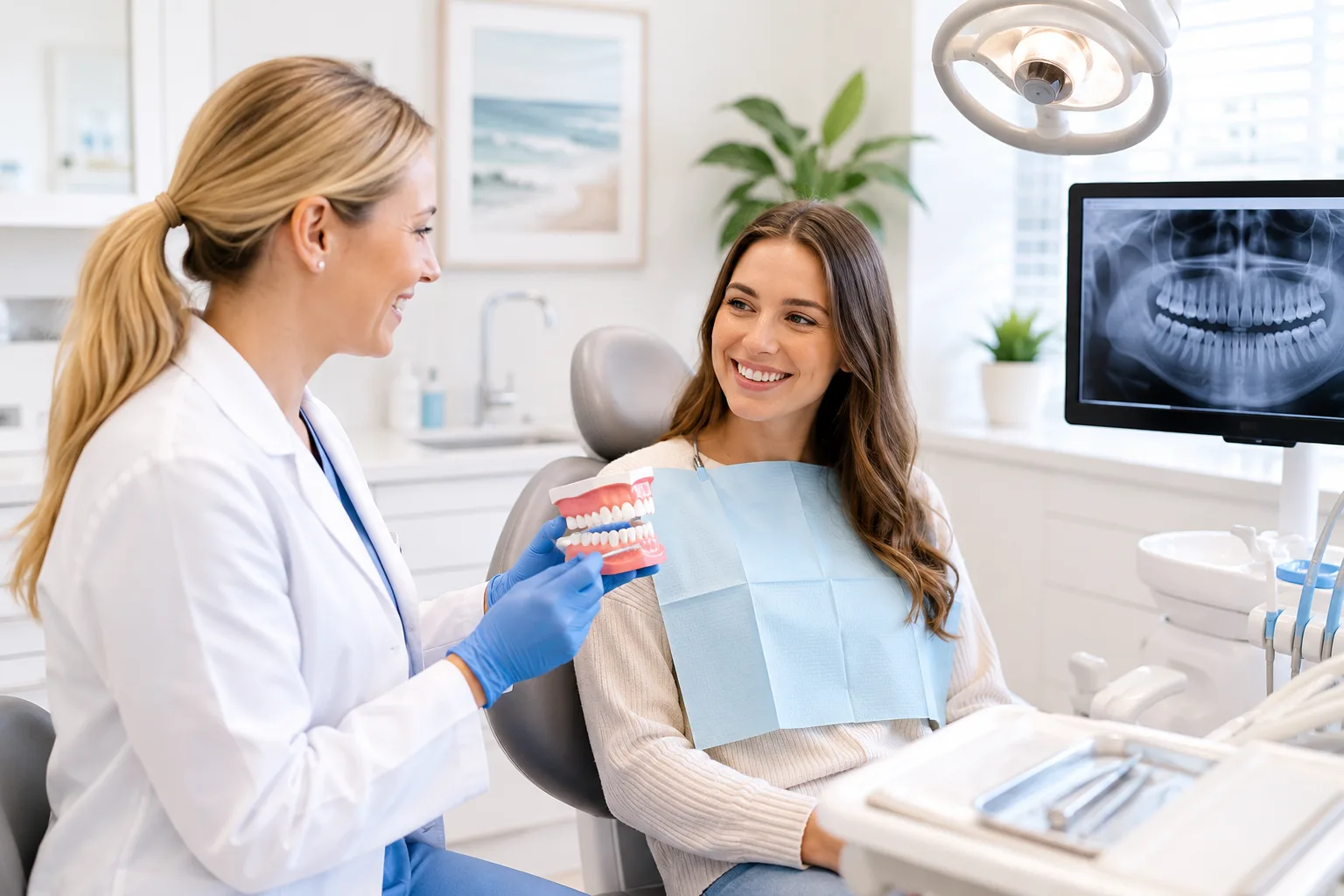
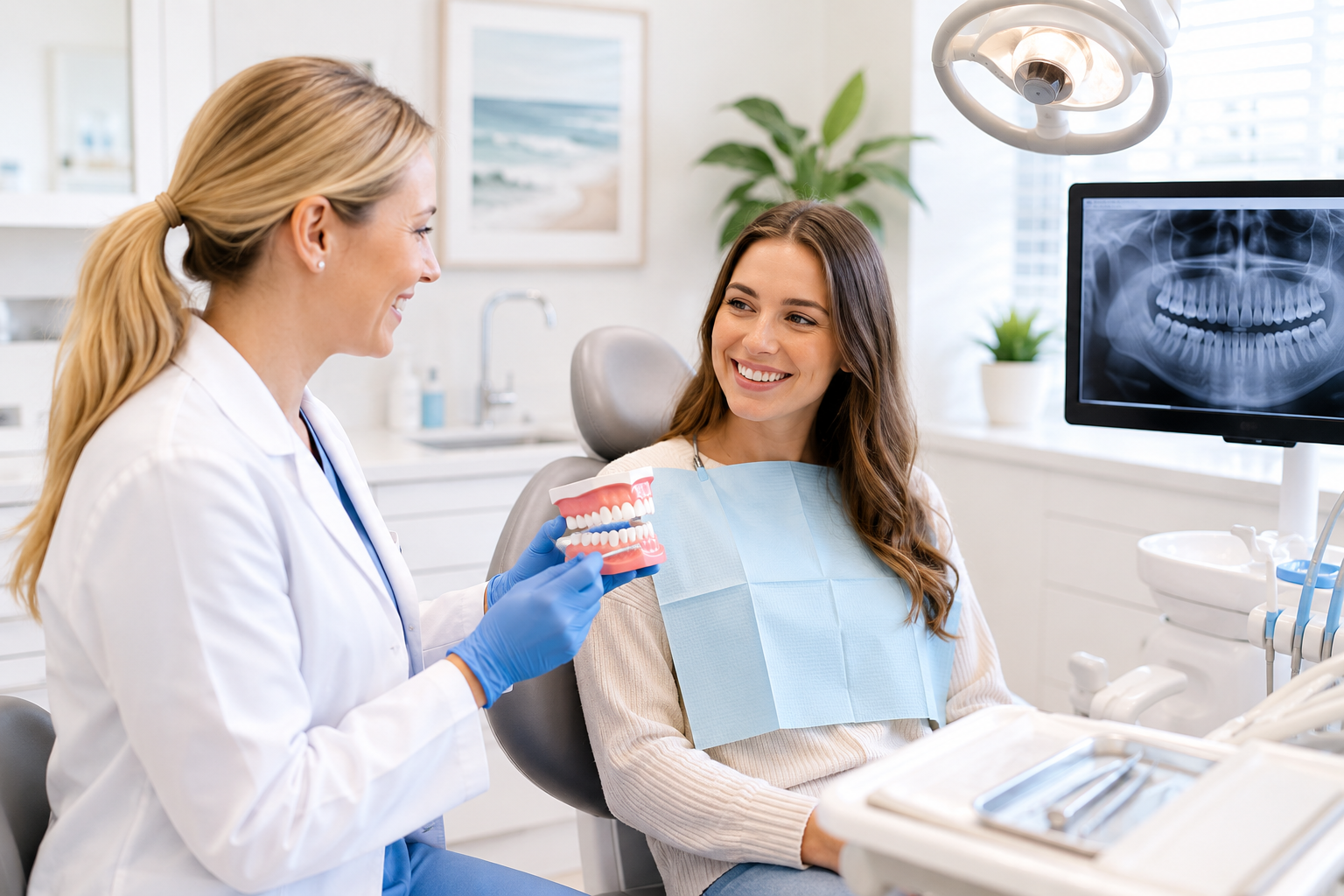
A whitening consultation usually begins with a discussion of the patient’s goals and dental history. The dentist may assess the teeth, gums, existing restorations, areas of sensitivity, and pattern of discoloration.
This assessment helps answer several practical questions:
- Is the discoloration likely to respond to bleaching?
- Are there cavities, gum inflammation, cracks, or exposed roots that should be addressed first?
- Will visible crowns, fillings, or veneers affect the final color match?
- Would in-office whitening, custom trays, or another approach better suit the patient?
- How can sensitivity be managed?
A professional cleaning may be recommended when plaque, tartar, or surface staining is affecting the appearance of the teeth. Cleaning and whitening serve different purposes: cleaning supports oral health and removes deposits, while bleaching changes the appearance of certain tooth pigments.
How long do whitening results last?
Whitening is not permanent. Teeth can gradually collect new stains, and natural color changes continue with age. The durability of the result depends heavily on daily habits, oral hygiene, diet, tobacco exposure, and the original cause of discoloration.
To help preserve a brighter smile, patients can:
- Brush twice daily with fluoride toothpaste and clean between the teeth each day.
- Attend regular dental examinations and professional cleanings.
- Rinse with water after coffee, tea, red wine, or other highly pigmented drinks.
- Avoid smoking and other tobacco products.
- Use a straw when appropriate to reduce contact between staining beverages and the front teeth.
- Follow the dentist’s instructions for occasional touch-ups rather than whitening continuously.
The American Dental Association also emphasizes daily brushing and flossing, regular dental visits, avoiding tobacco, and limiting foods and drinks that commonly contribute to stains.
How much does teeth whitening cost in Redwood City?
The cost of whitening in Redwood City can vary based on the treatment method, the materials used, whether custom trays are included, and whether the patient needs other dental care beforehand. In-office treatment and dentist-provided take-home systems also have different fee structures.
Because whitening is generally an elective cosmetic service, patients should ask the dental office for a written estimate and check their individual benefit plan rather than assuming coverage. The lowest advertised price may not include an examination, custom trays, follow-up care, or products for future touch-ups.
A consultation gives the dental team an opportunity to explain the options and provide an estimate based on the patient’s actual needs.
Who may need a different cosmetic approach?
Whitening is effective for many patients, but it cannot correct every concern. A different plan may be considered when discoloration comes from a nonresponsive internal stain, when one tooth is much darker than the others, or when visible restorations dominate the smile.
Depending on the cause and oral health findings, a dentist might discuss bonding, veneers, replacement of an existing restoration, or treatment for the affected tooth. These options involve different costs, benefits, and long-term considerations, so they should follow a complete evaluation rather than a quick cosmetic decision.
Frequently asked questions
Does whitening damage tooth enamel?
Whitening products used as directed are not intended to remove enamel. However, excessive or improper use can irritate the gums and may harm oral tissues. Patients should follow product instructions and seek dental guidance, particularly if they have sensitivity or untreated dental problems.
Will whitening work on crowns, veneers, or fillings?
No. Bleaching changes the appearance of natural teeth but does not lighten dental materials in the same way. A dentist can evaluate visible restorations and help plan for a more balanced result.
Can yellow teeth be whitened?
Many yellow or surface-stained teeth respond to bleaching, but the degree of improvement varies. Gray, brown, internally discolored, or injured teeth may respond differently. An examination helps establish realistic expectations.
Why is one tooth darker than the others?
A single dark tooth can result from previous injury, changes in the tooth’s inner tissue, decay, an old restoration, or other causes. It should be evaluated by a dentist before whitening because cosmetic bleaching may not address the underlying issue.
Can patients whiten their teeth if they have sensitive teeth?
Possibly. The dentist may suggest a lower-strength product, a modified schedule, desensitizing toothpaste, or treatment of an underlying problem first. Patients with significant sensitivity should not begin whitening without professional advice.
Is professional whitening better than store-bought strips?
Neither choice is ideal for every person. Professional treatment offers personalized assessment, controlled application, and clinical supervision. Store-bought products may suit mild surface staining when used correctly, but they cannot account for every dental condition or restoration.
Choosing teeth whitening in Redwood City, CA
Teeth whitening should do more than make a smile look brighter. It should also respect the health of the teeth, gums, and existing dental work. A thoughtful plan considers why the teeth are discolored, how much change is realistic, and how sensitivity can be minimized.
Patients interested in teeth whitening in Redwood City, CA can contact ARCH Dental + Aesthetics to ask questions and arrange a personalized consultation. A dental evaluation can clarify which option fits the patient’s smile, comfort preferences, and cosmetic goals—without pressure or unrealistic promises.