Missing teeth can affect much more than the appearance of a smile. They may make it harder to enjoy certain foods, speak comfortably, or feel at ease in social situations. Fortunately, modern dentures offer several ways to replace missing teeth while supporting everyday comfort and confidence.
Patients looking for dentures in Redwood City, CA may choose from traditional full dentures, partial dentures, or restorations supported by dental implants. The right solution depends on how many teeth are missing, the condition of the mouth, personal preferences, health considerations, and budget.
This guide explains the main options, what the treatment process may involve, and how patients can care for their new smile.
This article provides general educational information and is not a diagnosis or treatment recommendation. A licensed dentist should evaluate the mouth and medical history before recommending dentures or another tooth-replacement option.
What Are Dentures?
Dentures are removable or implant-supported restorations designed to replace missing teeth and some of the surrounding gum tissue. Each restoration is shaped to fit the individual patient’s mouth, so it can look natural and support functions such as smiling, speaking, and chewing.
Today’s dentures are not necessarily the bulky, artificial-looking appliances that some people remember. Modern materials and careful treatment planning can create a more lifelike appearance. Fit and comfort still depend on the patient’s anatomy, the quality of the design, and regular professional follow-up.
Full Dentures
Full, or complete, dentures replace all the teeth in the upper arch, lower arch, or both. Traditional full dentures rest on the gums and are held in place by their shape, suction, muscle control, and, in some cases, denture adhesive.
An upper denture often covers part of the roof of the mouth. A lower denture has a horseshoe shape that leaves room for the tongue. Because lower dentures have less surface area for support, some patients find that they move more than upper dentures.
Partial Dentures
A partial denture may be considered when healthy natural teeth remain. It fills one or more gaps and usually connects to nearby teeth with carefully designed clasps or attachments.
Replacing these gaps may improve appearance and chewing function. It can also help distribute biting forces across the mouth. A dentist will examine the remaining teeth and gums to determine whether they can support a partial denture.
Implant-Supported Dentures
Implant-supported dentures connect to dental implants placed in the jaw. Depending on the design, the restoration may snap on and off for cleaning or remain fixed in place and require professional removal.
Implants may provide greater stability than a conventional removable denture, particularly in the lower jaw. However, implant treatment involves surgery and is not suitable for every patient. Bone availability, gum health, medications, tobacco use, general health, and home-care habits may all influence treatment planning.
Patients can read ARCH Dental + Aesthetics’ guide to implant-supported dentures for an additional overview of this option.
Who Might Consider Dentures?
Dentures may be an option for an adult who has lost several or all natural teeth because of extensive decay, gum disease, injury, or another oral health concern. They may also replace teeth that cannot be predictably restored.
Age alone does not determine whether someone needs dentures. Some older adults keep their natural teeth throughout life, while younger adults may experience significant tooth loss. A complete dental examination is necessary to understand the cause of tooth loss and identify the most appropriate next step.
Whenever possible, a dentist will consider whether natural teeth can be preserved. If removal is necessary, the treatment plan should explain why, describe available alternatives, and outline how the missing teeth will be replaced.
What to Expect During the Denture Process
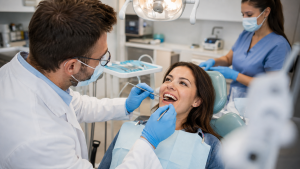
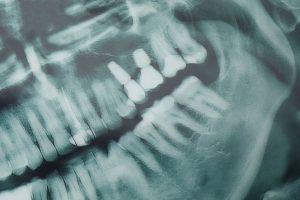
The process begins with a consultation. The dentist reviews the patient’s concerns, medical history, medications, existing teeth, gums, bite, and jaw structure. Dental X-rays or other imaging may be recommended when the dentist needs to evaluate tooth roots, bone, or possible implant sites.
If dentures are appropriate, records of the mouth are taken. These may include digital scans or impressions, bite measurements, photographs, and information about preferred tooth shape and shade. The dental team uses these records to plan a restoration that complements the patient’s face and bite.
Some patients can receive an immediate denture on the day teeth are removed. This approach prevents them from going without teeth during early healing, but the mouth changes as swelling settles and tissues recover. The immediate denture may therefore require adjustments, a reline, or eventual replacement. It should not be assumed to have the same fit as a denture made after the mouth has stabilized.
How Implant Denture Treatment Stages Differ
Implant treatment occurs in distinct phases. Early symptom recovery refers to the period when initial tenderness and swelling begin to improve. Soft-tissue healing involves the gums closing and adapting around the treated area. Osseointegration is a separate biological process in which the bone forms a stable connection with the implants.
The final restoration is completed only when the clinical conditions are appropriate. These phases do not follow one universal schedule, and the dental team should provide personalized expectations based on the procedure and the patient’s health.
Implants can also develop surgical, biological, or mechanical complications. Published clinical literature describes concerns such as inflammation around implants, loosening or fracture of components, and retention problems with overdentures. These possibilities do not mean that every patient will experience a complication, but they reinforce the importance of careful evaluation and ongoing maintenance. Patients considering implants should discuss individual benefits and risks with their dentist or specialist.
Adjusting to New Dentures
A new denture may initially feel larger or less natural than expected. The cheeks, tongue, and chewing muscles need time to learn how to work with it. Saliva production may temporarily increase, and certain words or foods may require practice.
Helpful adjustment habits can include:
- Starting with soft foods cut into small pieces
- Chewing slowly and using both sides of the mouth
- Avoiding very sticky or hard foods during the early adjustment period
- Reading aloud to practice speech
- Following the dentist’s instructions for wearing and removing the denture
- Returning for recommended adjustments rather than tolerating ongoing discomfort
A minor pressure spot may sometimes develop as the denture settles. Persistent pain, sores, instability, or difficulty eating should be evaluated. Patients should not sand, bend, glue, or otherwise modify a denture at home because this can worsen the fit or damage the appliance.
How to Clean and Care for Dentures
Dentures need daily care even though they cannot develop cavities in the same way as natural teeth. Food debris and plaque can collect on the restoration and around the gums, tongue, remaining teeth, or implants.
Patients should follow the cleaning directions provided for their specific denture material. General habits may include rinsing the appliance after meals, brushing it gently with an appropriate denture brush and cleanser, and handling it over a folded towel or basin of water to reduce the chance of breakage if dropped.
Regular toothpaste may be too abrasive for some denture materials. Hot water can also distort certain appliances. If a removable denture is soaked overnight, patients should use only a product recommended by their dental team and rinse the denture before placing it back in the mouth.
The gums, tongue, palate, remaining teeth, and implant attachments also require cleaning. Regular dental visits remain important after natural teeth are lost because the dentist can examine the oral tissues, evaluate the fit, and check the restoration for wear or damage.
Traditional Dentures vs. Implant-Supported Dentures
Neither choice is automatically best for everyone. Traditional dentures do not require implant surgery and are often more accessible financially. They can restore a complete smile, but their stability depends on the shape of the mouth and may change as the gums and jaw change over time.
Implant-supported dentures may feel more stable and reduce movement while speaking or chewing. In return, they require additional planning, surgical treatment, sufficient healing, diligent cleaning, and a higher initial investment. Implant components and the denture itself still require professional monitoring and maintenance.
A balanced consultation should also consider other choices, such as a dental bridge or individual implants, when some teeth are missing. The goal is to match the treatment to the patient’s health, priorities, and ability to maintain the result.
What Affects the Cost of Dentures in Redwood City, CA?
Denture costs vary because each case is different. Factors may include whether the patient needs a full or partial denture, the materials selected, the number and condition of remaining teeth, laboratory work, extractions, preparatory treatment, relines, and follow-up care.
Implant-supported options generally involve additional costs for imaging, surgery, implant components, and the final restoration. Bone or gum procedures may also affect the plan when clinically necessary.
Before treatment, patients should request a written estimate explaining what is included. Dental insurance may contribute toward some services, but benefits, waiting periods, annual limits, and exclusions vary. The least expensive initial choice may not always provide the best fit for a patient’s long-term priorities, so comfort, maintenance, durability, and future care should all be part of the conversation.
Choosing a Denture Dentist in Redwood City
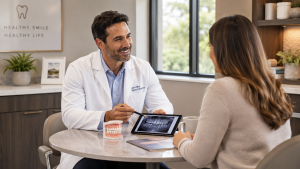
A good consultation should feel informative rather than rushed. Patients searching for dentures in Redwood City, CA can ask how the dentist evaluates fit, how many follow-up adjustments are included, what happens if the denture breaks, and which alternatives may be appropriate.
It is also helpful to ask whether the proposed denture will be immediate, conventional, removable, or implant-supported. Patients should leave with a clear understanding of the treatment stages, expected maintenance, potential limitations, and total estimated cost.
Frequently Asked Questions About Dentures
Will dentures look natural?
Modern dentures can be customized for tooth color, shape, size, and arrangement. The result will depend on the materials, design, available space, and individual anatomy. Patients should discuss their preferences during the planning stage rather than waiting until the denture is finished.
Can a person eat normally with dentures?
Many patients can enjoy a varied diet after they become comfortable with their dentures, although certain hard or sticky foods may remain challenging. Beginning with softer foods and chewing on both sides can make the transition easier.
Does every denture need adhesive?
No. A well-designed denture may function without adhesive, although some patients use an appropriate product for added confidence. Adhesive should not be used to hide a poor fit. If a denture repeatedly loosens or causes sores, a dentist should evaluate it.
Can someone sleep in dentures?
Patients should follow their dentist’s instructions. Many removable-denture wearers are advised to give the tissues a rest and clean the appliance outside the mouth. Individual recommendations may differ after extractions, surgery, or other treatment.
What should a patient do if a denture breaks?
The patient should keep all pieces and contact a dental office. Household glue and do-it-yourself repair kits may damage the material, affect the fit, or expose the mouth to unsuitable substances.
Do people with dentures still need dental checkups?
Yes. Checkups allow the dentist to examine the gums and other oral tissues, assess remaining teeth or implants, and determine whether the denture needs adjustment, repair, or relining.
A Comfortable New Smile Starts With a Personalized Plan
Dentures can offer a practical way to restore missing teeth, but successful treatment involves more than selecting an appliance. Careful planning, realistic expectations, a comfortable fit, daily hygiene, and professional follow-up all matter.
For patients considering dentures in Redwood City, CA, a one-on-one evaluation is the best way to compare full, partial, and implant-supported options. To ask questions and learn which approach may suit your needs, contact ARCH Dental + Aesthetics to request a consultation. The dental team can review your oral health, explain available options, and help you make an informed next decision without pressure.