Losing a tooth can affect much more than the appearance of a smile. It may change how a person chews, speaks, or feels in everyday social situations. Over time, nearby teeth may also shift into the open space. Fortunately, modern implant dentistry offers a stable and natural-looking way to replace one tooth, several teeth, or, in appropriate cases, a full arch.
For patients exploring implant dentistry in Redwood City, CA, understanding the process can make treatment feel far less intimidating. Dental implants are not simply replacement teeth. They are carefully planned restorations designed to work with the jaw, gums, bite, and remaining natural teeth.
This article provides general educational information and is not a diagnosis or treatment recommendation. A dentist or qualified implant clinician must evaluate your oral and overall health to determine whether implants are appropriate for you.
What Is a Dental Implant?
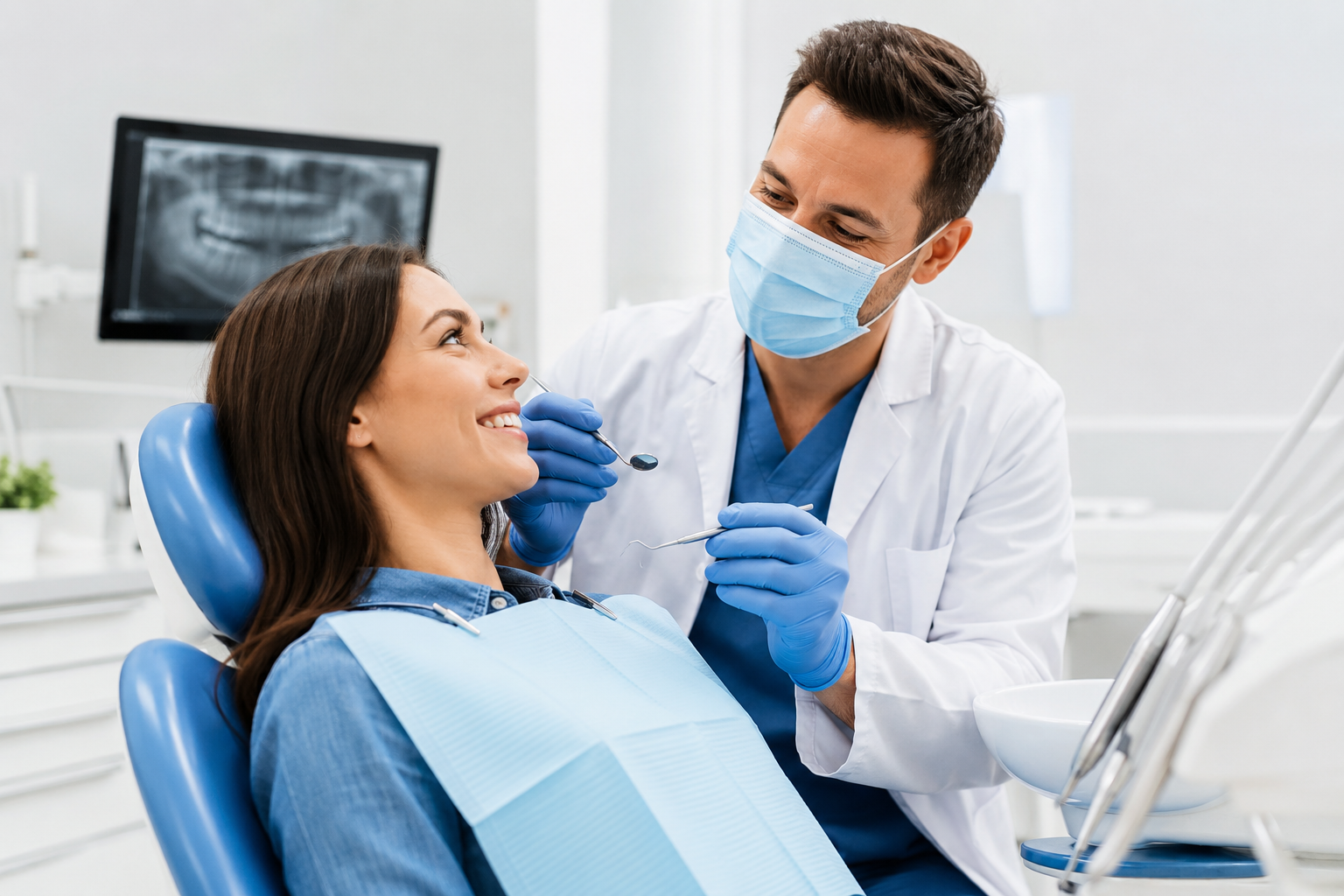
A dental implant is a small post placed in the jaw to support a replacement tooth. Most implants are made from titanium or another biocompatible material selected for its ability to function safely within the body.
An implant restoration typically has three main parts:
- Implant post: The portion placed in the jawbone, where it acts as an artificial tooth root.
- Abutment: A connector positioned between the implant and the visible restoration.
- Crown, bridge, or denture: The custom-made replacement teeth that restore appearance and function.
After placement, the bone gradually forms a close connection with the implant surface. This biological process is called osseointegration. Successful integration helps create a secure foundation for the final restoration, although individual healing and long-term outcomes vary.
What Can Implant Dentistry Treat?
Implant treatment can be adapted to several patterns of tooth loss. The right approach depends on how many teeth are missing, the condition of the jawbone and gums, and the patient’s goals.
Replacing One Missing Tooth
A single implant can support one custom crown. Unlike a traditional bridge, this approach generally does not require the adjacent teeth to support the replacement. The crown is shaped and shaded to blend with the surrounding smile.
Replacing Several Teeth
When multiple teeth are missing in the same area, an implant-supported bridge may be considered. A bridge can replace several teeth while using fewer implants than placing one beneath every missing tooth.
Replacing a Full Arch
Patients who have lost most or all of their upper or lower teeth may be evaluated for an implant-supported denture or fixed full-arch restoration. Some treatment concepts use a strategically planned group of implants to support a complete row of teeth. ARCH Dental + Aesthetics provides additional information in its patient-friendly guide to full-arch dental implants.
Full-arch treatment is more complex than replacing one tooth. It requires careful assessment of bone support, bite forces, smile design, hygiene needs, and the condition of any remaining teeth.
Potential Benefits of Dental Implants
Many patients consider implants because they feel and function more like natural teeth than removable options. Depending on the case, potential benefits may include:
- A stable replacement that does not rely only on the gums for support
- Improved chewing compared with living with an open space or an unstable removable appliance
- A restoration designed to match nearby teeth
- Support for the jawbone in the area where the implant is placed
- No need to remove a fixed implant crown for routine cleaning
- Options for single-tooth, multiple-tooth, and full-arch replacement
Implants are not maintenance-free, and no restoration can be guaranteed to last for a particular length of time. Daily plaque control, professional dental care, healthy gum tissue, and management of habits such as smoking or grinding all matter.
Who May Be a Candidate?
Many adults with missing or failing teeth can be evaluated for implant treatment. Age alone is not usually the deciding factor. Dentists pay closer attention to overall health, oral hygiene, bone availability, gum health, and the person’s ability to heal.
An implant consultation may include a review of:
- Medical conditions and current medications
- Gum health and history of periodontal disease
- Jawbone height, width, and density
- Smoking or nicotine use
- Teeth grinding or clenching
- The condition of nearby teeth
- Expectations for appearance, comfort, timing, and maintenance
Having limited bone does not automatically rule out treatment. Some patients may be candidates for bone grafting or an alternative implant plan. Others may be better served by a bridge or removable denture. A personalized examination is the only reliable way to compare these choices.
What Happens During the Implant Process?
1. Consultation and Planning
The process begins with a dental examination, health review, and appropriate imaging. The clinician assesses the proposed implant site and explains possible alternatives. This is also the right time for the patient to discuss anxiety, sedation considerations, costs, and scheduling needs.
2. Preparing the Implant Site
A damaged tooth may need to be removed before implant placement. If the jaw lacks adequate support, grafting may be recommended. Preparation and implant placement may occur together in selected cases, while other patients need separate stages.
3. Placing the Implant
The area is numbed before the implant is positioned in the jaw. Comfort options depend on the procedure, the patient’s health, and the dental setting. Patients should arrange transportation if their clinician recommends medication or sedation that makes driving unsafe.
4. Healing and Osseointegration
Implant recovery involves several distinct phases. Early symptoms such as tenderness, minor swelling, or bruising occur shortly after surgery and generally improve as initial recovery progresses. Gum tissue then continues to heal around the site.
Osseointegration is a separate, slower process in which the jawbone establishes a stable connection with the implant. It should not be confused with feeling comfortable after the procedure. A patient may feel better well before the implant is ready to support its final restoration.
5. Final Restoration
Once the clinician confirms that the implant is stable and the tissues are ready, an abutment and custom crown, bridge, or denture can be attached. Completion of the entire treatment therefore occurs later than early symptom recovery or soft-tissue healing. The schedule varies according to the treatment site, grafting needs, health factors, and type of restoration.
Does Dental Implant Treatment Hurt?
Local anesthetic is used to numb the treatment area during implant placement. Patients may still notice pressure or vibration, but they should tell the dental team if they feel sharp discomfort.
Some soreness and swelling can occur afterward. The clinical team should provide individualized instructions for pain control, eating, oral hygiene, and activity. Patients should not exceed medication directions or assume that a drug is safe with their medical conditions or prescriptions.
Severe or worsening pain, heavy bleeding, increasing swelling, fever, difficulty breathing or swallowing, or a restoration that suddenly feels loose requires prompt professional guidance. Breathing or swallowing difficulty may require emergency care.
How Much Does Implant Dentistry Cost in Redwood City?
There is no single fee that applies to every implant case. The total cost may be influenced by the number of teeth being replaced, imaging, extractions, grafting, implant components, provisional teeth, the final restoration, and any comfort or sedation services.
Patients comparing quotes should ask whether each estimate includes:
- The implant post, abutment, and final restoration
- Diagnostic imaging and surgical planning
- Extractions or bone grafting, if required
- Temporary replacement teeth
- Follow-up appointments
- Coverage for repairs or adjustments
Dental insurance may cover certain portions of treatment but not others. Coverage depends on the individual plan, so a written estimate and benefits review can help patients understand anticipated out-of-pocket costs. Financing availability and terms should also be confirmed directly with the practice.
Caring for Dental Implants
An implant cannot develop a cavity, but the gums and bone around it can still become inflamed or infected. Natural teeth near the implant also remain vulnerable to decay and gum disease.
Long-term care commonly includes brushing twice daily, cleaning between the teeth and around the implant, and attending examinations and professional cleanings at intervals recommended by the dental team. A dentist or hygienist can demonstrate floss, interdental brushes, or other tools suited to the restoration.
Patients should also mention clenching or grinding. In some cases, a protective nightguard may be recommended to help manage damaging bite forces. Regular follow-up allows the team to monitor the implant, gums, bite, and restoration before a small concern becomes more difficult to address.
Frequently Asked Questions
Can a dental implant be placed immediately after an extraction?
Sometimes, but not in every case. The dentist must consider infection, bone support, gum condition, implant stability, and the planned restoration. Delayed placement may provide a more appropriate path for some patients.
Will a patient receive a tooth on the same day?
A temporary tooth may be possible in selected cases. Same-day temporary teeth do not mean that osseointegration is complete. Patients must follow eating and care instructions closely while the implant heals. The final restoration is usually provided only when the clinician determines that the site is ready.
Are implants better than bridges or dentures?
Each option has advantages and limitations. Implants can offer strong support and preserve adjacent tooth structure in certain cases, while bridges or dentures may be more suitable based on anatomy, health, budget, treatment time, or personal preference.
Can smokers receive dental implants?
Smokers can be evaluated, but nicotine use may interfere with healing and increase treatment risks. Honest discussion about smoking or vaping helps the clinician plan safer care and offer cessation support when appropriate.
How long do dental implants last?
No dentist can promise a specific lifespan. Many implants function for years with appropriate planning and maintenance, but longevity depends on gum and bone health, hygiene, bite forces, medical factors, habits, and regular professional care. The crown or other visible restoration may need repair or replacement separately from the implant post.
Explore Implant Dentistry in Redwood City, CA
A missing tooth does not have one universal solution. The best plan is the one that fits the patient’s health, anatomy, priorities, and ability to maintain the result. A thorough consultation should explain both implant and non-implant options, along with expected stages, risks, fees, and long-term care.
Patients considering implant dentistry in Redwood City, CA can contact ARCH Dental + Aesthetics to ask questions and schedule an individualized evaluation. Bringing a medication list, insurance information, and a written list of concerns can help make the conversation productive and comfortable.